
Bumblebees
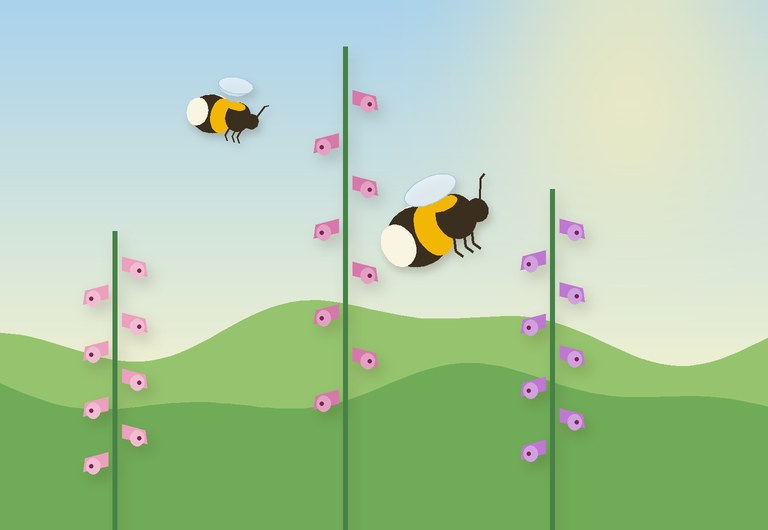
Bumblebees are the big, furry, gentle bees of the garden. There are around 250 species worldwide, mostly in cooler parts of the Northern Hemisphere. Their thick coat and large bodies help them cope with weather that keeps many other insects at home.
A colony for one year
A bumblebee colony lives for only one season. In spring a large queen wakes up from her winter sleep, finds a nest site – often an old mouse hole or a tussock of grass – and raises the first workers by herself. The colony grows to a few dozen or a few hundred bees. In late summer it produces new queens and males. Only the young, mated queens survive the winter, ready to start again.
Warming up
Bumblebees can shiver their flight muscles to warm up before take-off. That is why you often see them out on cool, cloudy days and early in the morning. Move the slider to see who is likely to be flying:
This tool needs JavaScript.
Buzz pollination
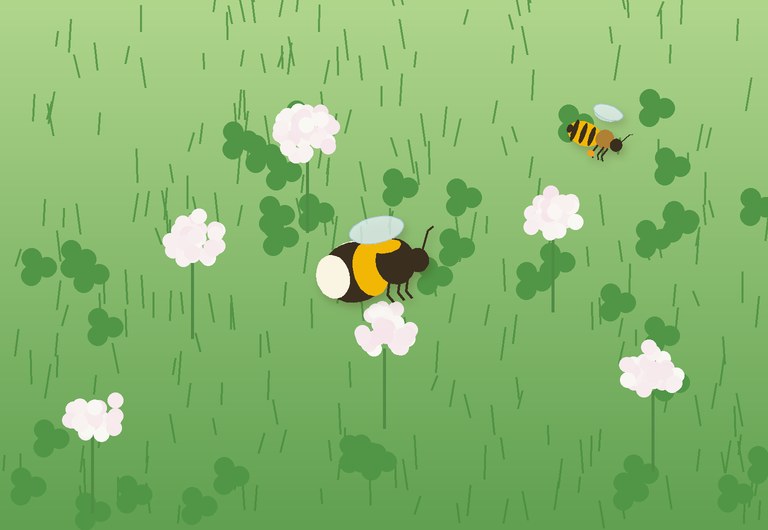
Some flowers, such as tomatoes and blueberries, hold their pollen tightly inside. Bumblebees grab the flower and vibrate their flight muscles very fast. The buzz shakes the pollen out – this is called buzz pollination or sonication. Honeybees do not do this, which is one reason bumblebees are used in greenhouses.
How to help bumblebees
- Plant early flowers such as lungwort, willow and heather for hungry spring queens.
- Grow tube-shaped flowers like foxglove, comfrey and catmint for long-tongued species.
- Leave some rough grass, hedge bottoms or compost areas undisturbed for nests.
Royal facts
- SpeciesAround 250 worldwide
- ColonyLives one season; only young queens overwinter
- Special skillBuzz pollination
- StingsRarely – bumblebees are calm unless disturbed