
The Queen Bee
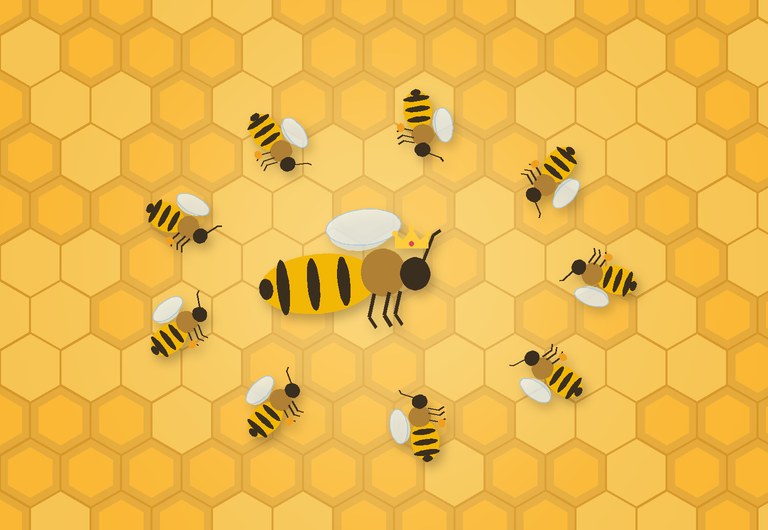
In every honeybee colony there is normally one queen. She is not a ruler who gives orders – the colony works together without a boss – but she is the mother of almost every bee in the hive. Without her, the colony cannot grow.
Made by food
A queen starts life as an ordinary female egg, exactly like a worker. The difference is food. Larvae chosen to become queens are raised in special, larger cells and fed plenty of royal jelly, a rich food made by young worker bees, during their whole development. Worker larvae get royal jelly only for the first days. This diet makes the queen grow bigger and develop fully working ovaries.
Her life
About a week after emerging, a young queen makes one or a few mating flights. She mates in the air with many drones from other colonies and stores the sperm for the rest of her life. Then she returns home and starts laying eggs. In early summer a strong queen can lay well over a thousand eggs a day.
Queen, worker or drone?
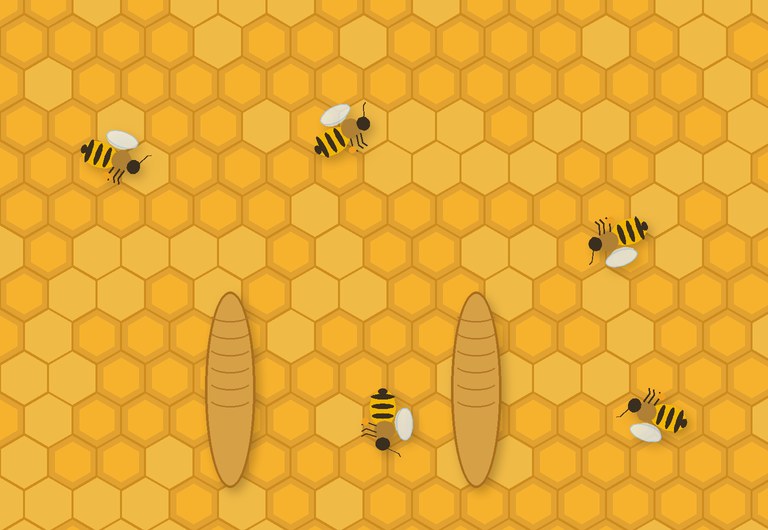
Tap the three bees below to compare them, then move the slider to follow an egg as it becomes an adult bee. The queen develops fastest of all.
This tool needs JavaScript.
A new queen
When a colony becomes crowded, or when the old queen weakens, workers raise new queens. Often the old queen leaves with part of the colony in a swarm to find a new home, while a young queen takes over the old hive.
Royal facts
- DevelopmentAbout 16 days from egg to adult
- FoodRoyal jelly through her whole larval life
- EggsUp to about 1,500–2,000 a day at the peak of the season
- Life spanUsually 2–3 years