
Solitary Bees
When we think of bees, we usually picture a busy hive. But most bee species do not live in colonies at all. They are solitary bees: each female builds and stocks her own small nest, without a queen or workers.
Where they nest
Most solitary bees nest in the ground. Mining bees dig narrow tunnels in bare soil or lawns, leaving small volcano-shaped mounds. Others use hollow stems, beetle holes in dead wood or gaps in old walls. Mason bees close their nest cells with mud, and leafcutter bees line them with neat round pieces cut from leaves.

A short, busy life
Adult solitary bees often fly for only a few weeks. In that time a female builds a row of cells, puts a ball of pollen and nectar in each, lays one egg on it and seals it. The young develop inside, spend the winter in the nest and come out the next year when their flowers bloom.
Gentle and efficient
Solitary bees have no hive to defend, so they rarely sting. Many are excellent pollinators. Mason bees, for example, carry pollen loosely on their bellies and drop lots of it as they move from flower to flower, which is why fruit growers value them.
Check your bee hotel
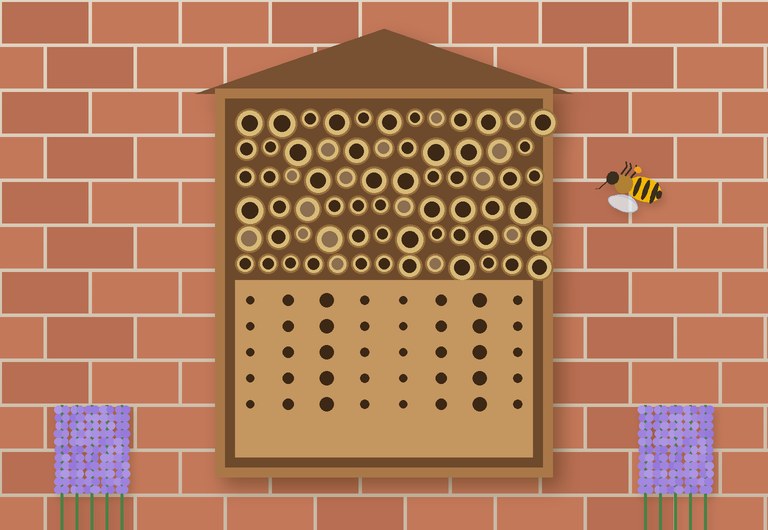
A bee hotel can give hollow-nesting species a home – if it is made well. Tick what is true for yours:
This tool needs JavaScript.
Royal facts
- How manyMost of the world’s bee species are solitary
- NestsMostly in the ground; some in stems, wood and walls
- StingingRare – they have no colony to defend
- Flying seasonOften just a few weeks a year