
Honeybees
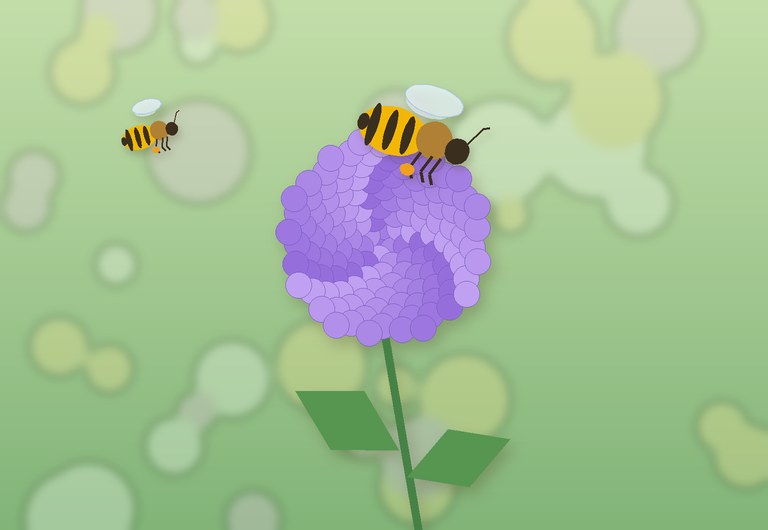
The western honeybee lives in large colonies of tens of thousands of bees in summer. People have kept honeybees for thousands of years for their honey and wax, and today they are important pollinators of many crops.
A job for every age
A worker bee’s job changes as she gets older. Young workers stay inside: they clean cells, feed larvae, build wax comb and guard the entrance. In the last part of their life they become foragers and fly out to collect nectar, pollen, water and plant resin.
Honey and wax
Foragers bring nectar home in a special “honey stomach”. Inside the hive, bees pass it on, add enzymes and fan their wings to evaporate water until the nectar becomes thick honey. They store it in wax cells and cap them with a thin layer of wax. Wax itself is made by young workers from glands on the underside of their bodies.
The waggle dance
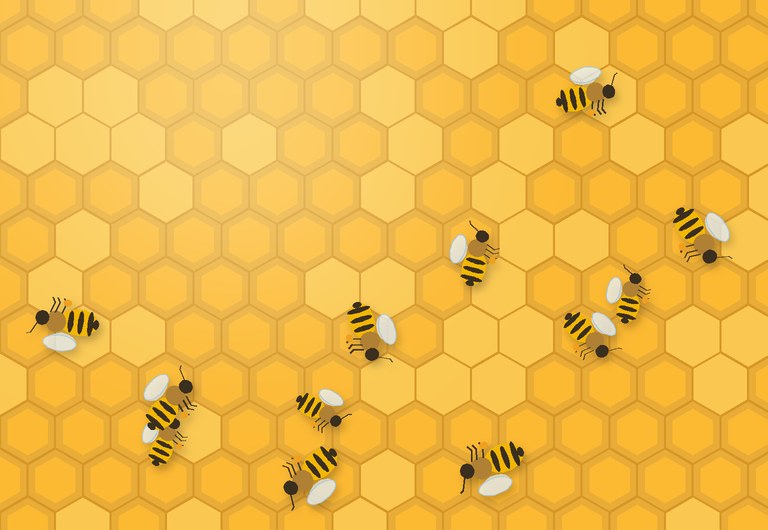
When a forager finds good flowers, she tells her sisters with a dance on the comb. In the waggle dance she runs in a straight line while waggling her body, then loops back and repeats. The direction of the waggle run, compared with straight up, shows the direction of the flowers compared with the sun. The length of the waggle shows the distance. For food very close to the hive the dance is short and round.
The Austrian scientist Karl von Frisch decoded this dance and shared the Nobel Prize in 1973 for his work on animal behaviour. Try it yourself:
This tool needs JavaScript.
Royal facts
- Colony sizeTens of thousands of bees in summer
- WorkersAll female; summer workers live about 5–6 weeks
- Dance languageDecoded by Karl von Frisch
- Brood temperatureKept at about 35 °C