
Pollination
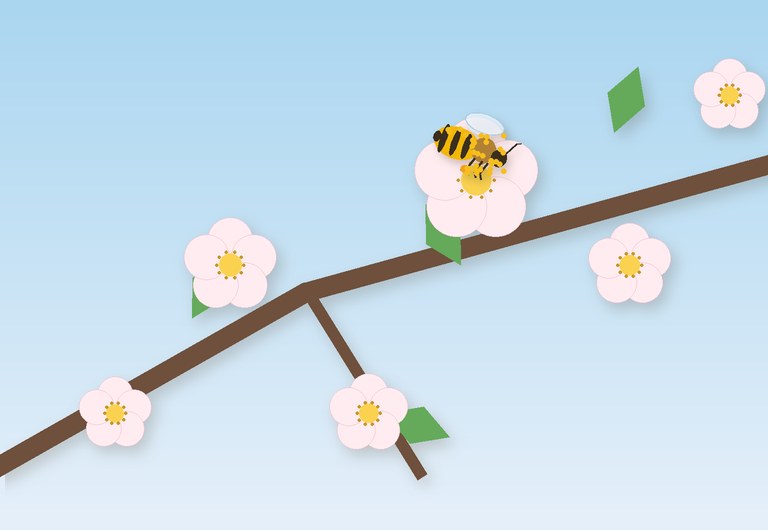
To make seeds and fruit, most flowering plants need pollen to travel from one flower to another of the same kind. This is pollination. Some plants use the wind, but many rely on animals – and bees are among the most important of them.
Why bees are so good at it
Bees visit flowers on purpose to collect both nectar and pollen, and they often stick to one kind of flower on a trip. Their hairy bodies pick up pollen easily, and some of it rubs off on the next flower they visit. One visit can be enough to start a seed.
Food on our plates
Many fruits, vegetables, nuts and seeds benefit from insect pollination – apples, cherries, strawberries, pumpkins, almonds and many more. International studies have found that about three-quarters of the leading types of food crops benefit at least partly from animal pollination, although staple crops like wheat and rice are pollinated by the wind.
Shapes and visitors
Flowers come in shapes that suit different visitors. Tap a flower shape to see who usually visits it and why:
This tool needs JavaScript.
How you can help
- Grow a variety of flower shapes and colours.
- Aim for flowers in every month from early spring to autumn – the Bloom Calendar helps.
- Avoid spraying flowers that bees are visiting.
- Leave some wild corners, bare soil and old stems for nesting.
Royal facts
- PollinationMoving pollen between flowers of the same kind
- Food cropsAbout three-quarters of leading crop types benefit from animals
- Wind-pollinatedWheat, rice and maize
- Best helpMany flowers, many shapes, many months